
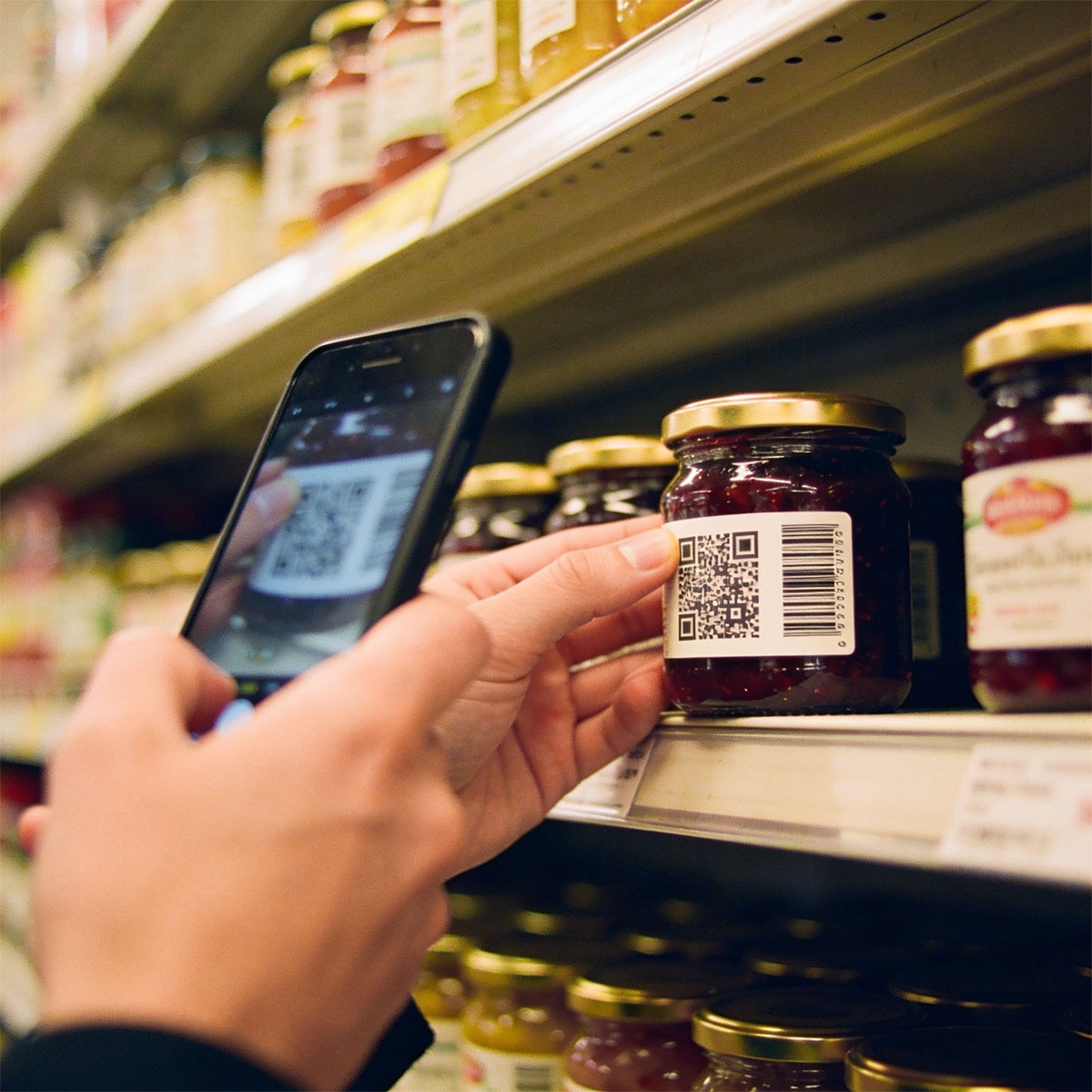
The implementation of the new QR Code system with GS1 Digital Link has already begun
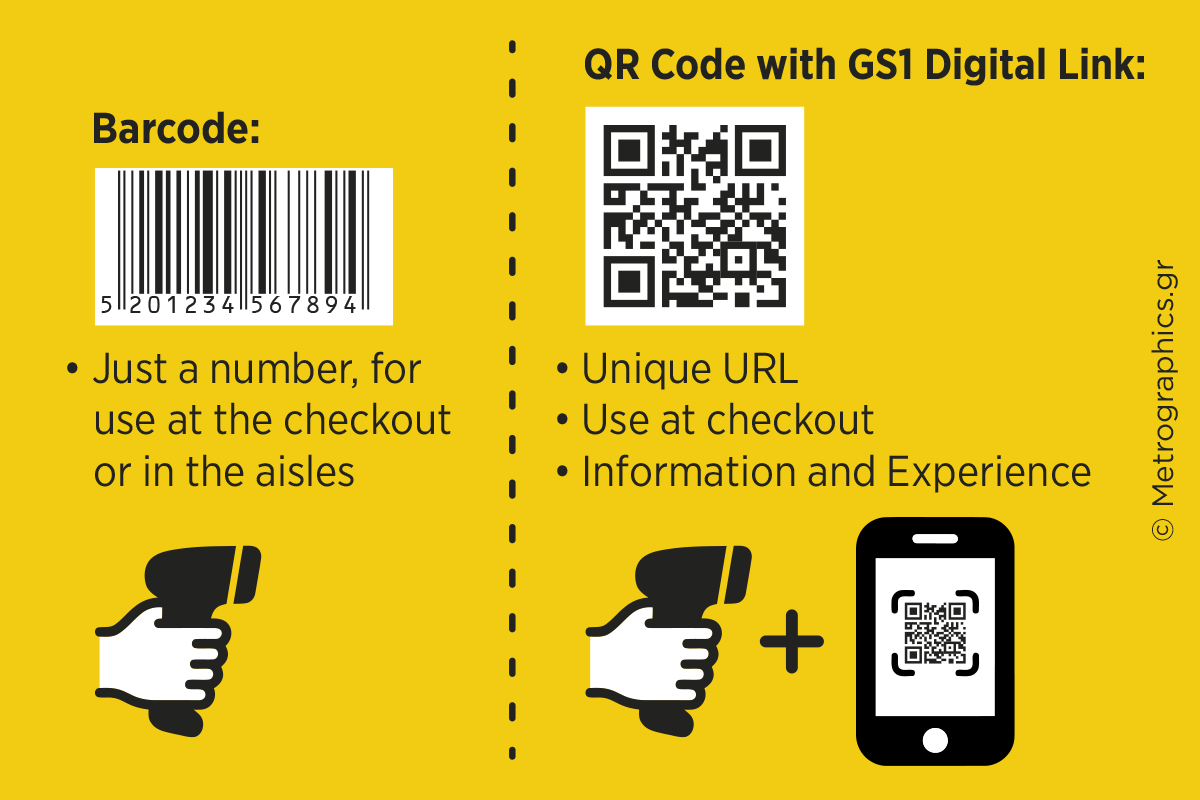
The QR Code with a web link (QR Code with GS1 Digital Link) that we have begun to see printed on packaging is the natural evolution of the barcode. Unlike the traditional barcode, which contains a simple product identification number, this new standard incorporates a web link (URL) that leads to a dynamic page with product information. By simply scanning the QR code with a smartphone, consumers or professionals can gain immediate access to details such as origin, ingredients, certifications, or even marketing information. In this way, this packaging labeling ceases to be merely a procedural formality and becomes a communication channel.
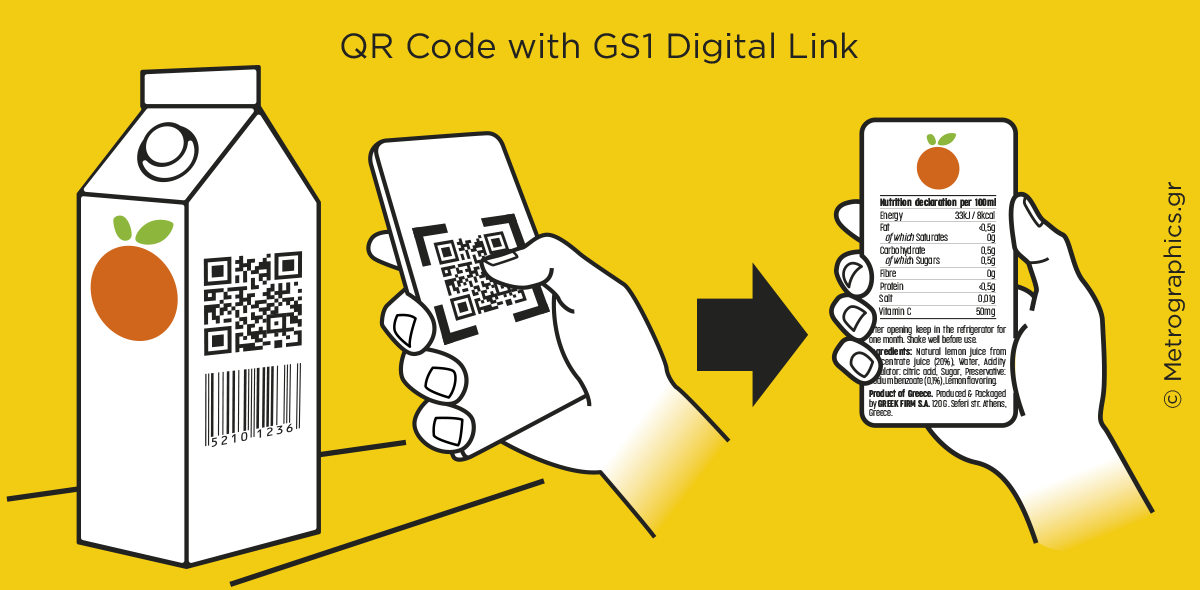
QR codes with GS1 Digital Link are set to gradually replace simple barcodes. A specific global roadmap is already in place, according to which, by 2027, electronic retail systems equipped with the appropriate scanning devices will be able to read these symbols at the point of sale. In practice, for a transitional period, the two systems—barcodes and QR codes—will coexist until both manufacturers and retailers adapt and the technology matures.
In Greece, the implementation of the standard is in a transitional phase. GS1-Greece, the organization responsible for providing and managing the international GS1 barcode system in Greece, has already introduced and supports the GS1 Digital Link system, while businesses and organizations are gradually beginning to adapt.
The use of QR codes with GS1 Digital Link is not currently mandatory. However, it is an international standard developed by the GS1 organization and, as was the case with barcodes in the past, it is expected to become a practically indispensable tool for the distribution and marketing of products. Adopting it early on enables businesses to better organize their information and gain a competitive advantage.
In terms of cost, creating the QR code and properly applying it to packaging is not significant; however, its implementation involves creating and maintaining the web page to which the QR code link leads. The total cost depends on the complexity of the data and the scale of the implementation; however, it remains affordable relative to the capabilities it offers, especially when used properly as an information and communication tool.
There are already several online platforms available for managing GS1 Digital Link, either as specialized services or as customized solutions integrated into corporate systems. Choosing the right approach depends on each company’s needs, the number of products, and the level of control required for information management.
Successful implementation, however, is not just a matter of technology. It requires proper planning, an understanding of the specifications, and knowledge of printing and placement on packaging, so that the symbol is functional at all stages of the supply chain and legible to the end user.
Metrographics has the expertise and infrastructure to create and print QR codes with GS1 Digital Link, as well as all traditional barcode formats. At the same time, it understands the technical specifications and the correct way to integrate them into packaging, ensuring that they function reliably in practice. Furthermore, it can mass-generate QR codes and barcodes with variable data, meeting large-scale needs in applications such as cards, coupons, labels, and promotional materials. In this way, it provides comprehensive support to businesses looking to transition into the new era of digitally connected product labeling.